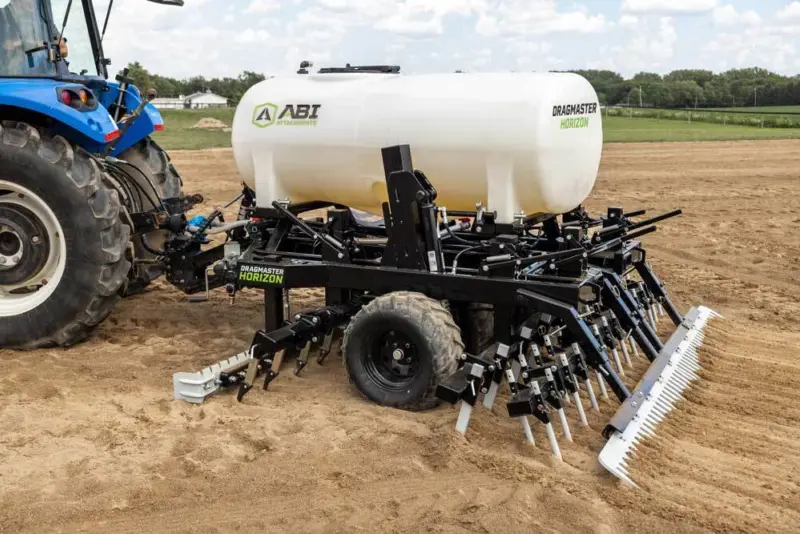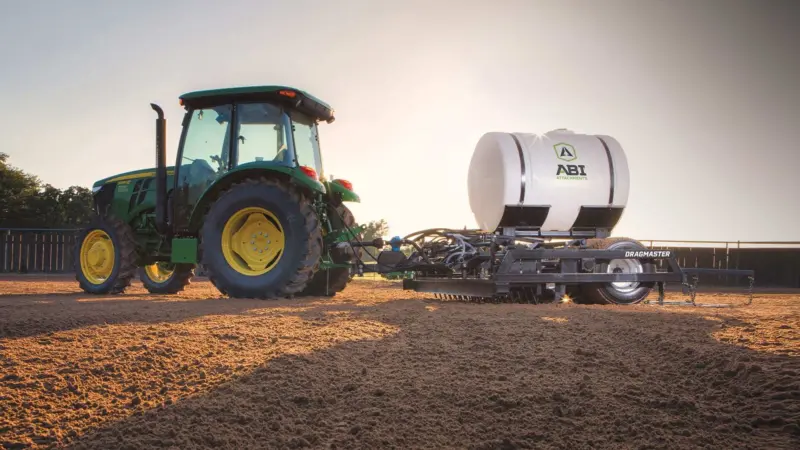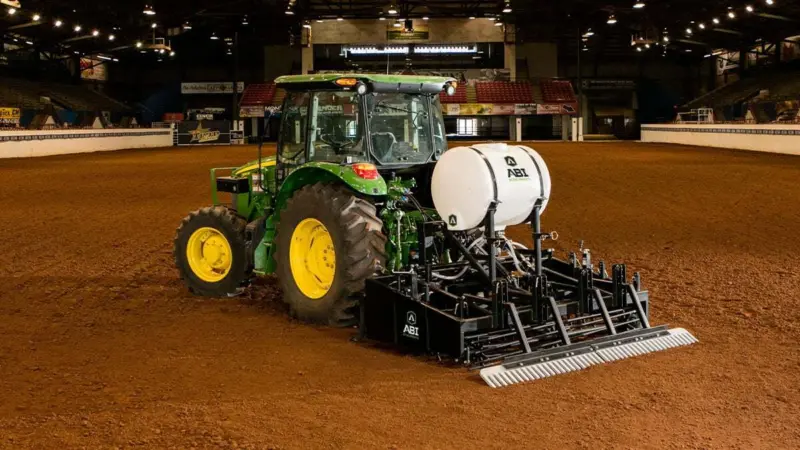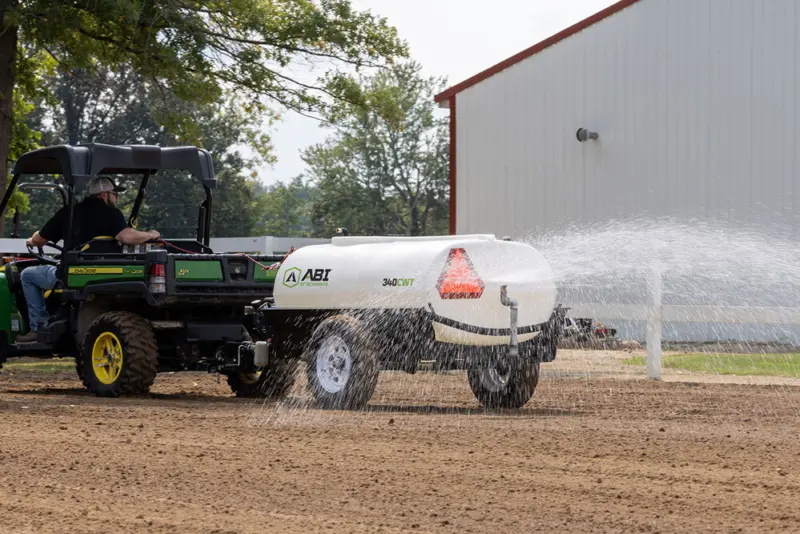
In equestrian arenas, moisture is not simply “added water.” It is a structural component of how footing behaves mechanically under hoof impact, turning forces, acceleration, and repeated traffic.
Proper moisture management influences:
- traction consistency
- shear resistance
- compaction behavior
- cushioning response
- dust suppression
- long-term footing stability
It is one of the most important and misunderstood aspects of arena maintenance.
Moisture Is Part of the Footing System
Water is not separate from the footing profile. In most arenas, it actively changes how footing particles interact.
Depending on footing composition, moisture can:
- increase particle cohesion
- alter friction between particles
- change compaction resistance
- influence load distribution under impact
Because of this, moisture behaves more like a performance modifier within the footing system rather than simply a surface condition.
The Physics of Moisture in Arena Footing
Arena footing behaves as a granular material system. Water changes the relationship between particles through several mechanisms.
Cohesion Between Particles
Small amounts of moisture can create weak capillary bonding between particles.
This helps:
- stabilize loose footing
- reduce excessive displacement
- improve surface consistency
In sand-based systems, this is one reason lightly moist footing often feels more stable than completely dry footing.
However:
- too much moisture fills pore space
- reduces air gaps between particles
- increases density and resistance to movement
At that point, footing may feel heavy or compacted.
Shear Resistance and Traction
Moisture strongly affects how footing resists horizontal movement under hoof forces.
This influences:
- push-off traction
- turning stability
- sliding behavior
- hoof penetration depth
If footing becomes:
- too dry → particles separate too easily
- too wet → footing may shear unevenly or compact excessively
The goal is controlled resistance, not maximum firmness.
Impact Energy Distribution
Moisture also affects how force moves through the footing profile.
Balanced moisture helps:
- distribute impact forces more evenly
- reduce abrupt hardness changes
- stabilize footing depth consistency
Poor moisture balance can create:
- hard compacted zones
- inconsistent rebound behavior
- variable hoof response across the arena
Arena Moisture Is Never Uniform
One of the most important realities in arena management:
moisture naturally becomes uneven over time.
This happens because water movement is dynamic and affected by multiple variables.
How Moisture Moves Through an Arena
Gravity-driven infiltration
Water moves downward through pore spaces after irrigation or rainfall.
Capillary movement
Moisture can move laterally between particles, especially in finer materials.
Evaporation
Surface layers dry faster than deeper layers due to:
- sunlight
- airflow
- temperature
- humidity
Compaction zones
High-traffic areas compress pore space, changing how water infiltrates and redistributes.
This is why:
- corners
- rail lines
- landing zones
- repetitive training paths
often develop different moisture behavior than the center of the arena.
Footing Type Changes Moisture Behavior
Different footing systems manage water differently.
Sand-Based Footing
Characteristics:
- rapid drainage
- low natural cohesion
- quick drying response
Management implications:
- requires more frequent moisture balancing
- sensitive to drying and dust generation
- grooming strongly affects moisture distribution
Sand-Fiber Blends
Characteristics:
- improved moisture retention
- increased structural stability
- more consistent particle interaction
Management implications:
- often maintains consistency longer
- still requires redistribution and moisture monitoring
- can separate over time if improperly maintained
Clay-Containing Systems
Characteristics:
- high water retention
- slower drainage
- greater compaction tendency
Management implications:
- more vulnerable to overwatering
- can become dense or sealed under traffic
- moisture changes may persist longer after weather events
Synthetic and Wax-Coated Footing
Some engineered footing systems:
- reduce evaporation rates
- stabilize moisture conditions
- alter how water interacts with particles
However:
- they still require moisture monitoring
- drainage and compaction remain important
- environmental conditions still affect performance
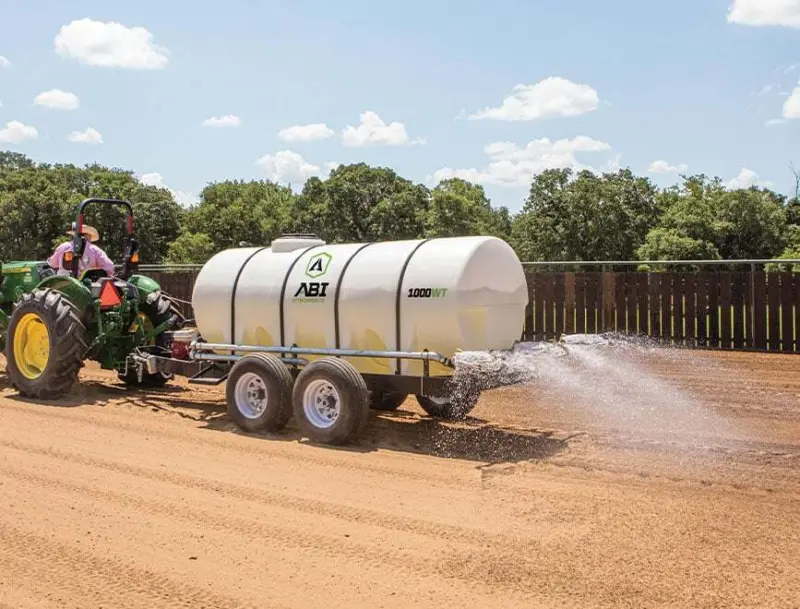
Irrigation Is Only One Part of Moisture Management
A common misconception is:
arena moisture management = watering
In reality, irrigation is only the input side of the system.
True moisture management also includes:
- drainage efficiency
- footing composition
- grooming practices
- evaporation rate control
- traffic distribution
- compaction management
The Role of Grooming Equipment
Mechanical conditioning equipment directly affects moisture behavior.
Grooming influences:
- moisture redistribution
- compaction breakup
- particle mixing consistency
- depth uniformity
- airflow into footing profile
Poor grooming practices can:
- trap moisture unevenly
- create isolated wet or dry zones
- accelerate compaction imbalance
Well-adjusted grooming systems help maintain:
more repeatable footing response across the arena surface.
Why Overwatering Creates Problems
More water does not automatically mean better footing.
Excess moisture may:
- reduce pore space
- increase density
- create unstable shear behavior
- slow recovery after traffic
In severe cases:
- footing seals at the surface
- drainage slows dramatically
- compaction accelerates
This is especially important in fine-particle or clay-heavy systems.
Moisture Management Is Climate-Dependent
Arena moisture behavior changes based on:
- temperature
- humidity
- sunlight exposure
- wind conditions
- rainfall frequency
For example:
- dry climates increase evaporation pressure
- humid climates slow surface drying
- freeze-thaw cycles alter footing structure and drainage behavior
There is no universal watering schedule that works everywhere.
Key Technical Reality
There is no perfect universal moisture level for all arenas.
The goal is:
maintaining a consistent and predictable footing response within the intended discipline and footing system.
This means moisture targets differ between:
- dressage arenas
- hunter/jumper arenas
- barrel racing setups
- indoor vs outdoor facilities
- sand vs synthetic footing systems
Key Takeaway
Arena moisture management is the continuous balancing of water distribution, footing structure, drainage behavior, and mechanical conditioning to maintain consistent arena performance over time.
It is not simply watering the arena. It is a dynamic systems-management process influenced by:
- footing composition
- climate
- compaction
- drainage
- grooming practices
- traffic patterns
Well-managed moisture helps maintain:
- stable traction
- predictable footing behavior
- reduced dust
- balanced impact response
- long-term surface consistency
Poor moisture management, by contrast, is one of the fastest ways to create inconsistent footing and accelerated surface degradation.