Every spring, the same cycle starts over. Snow melts, the driveway finally becomes visible again, and the potholes are back in the exact same places they were last year. Most property owners respond the same way: dump fresh gravel into the holes, smooth it out, and hope it lasts longer this time.
A few weeks later, the potholes return.
The problem is not the gravel. The problem is the shape underneath it.
A Pothole Is Not Just a Hole
A pothole is a compacted bowl formed by repeated traffic over time. Vehicle tires compress the gravel around the edges until the sidewalls become hard and dense. Once that shape forms, it acts like a mold.
When you simply throw loose gravel back into the hole, those compacted walls are still there underneath. Traffic immediately starts pushing the fresh gravel back out of the bowl. Eventually the exact same pothole reforms in the exact same location.
That is why cosmetic fixes fail.
The only way to permanently repair a pothole is to destroy the compacted structure that created it in the first place.
The Correct Way to Fix a Gravel Driveway Pothole
To properly repair a pothole, you need to:
- Loosen the gravel all the way to the bottom of the hole
- Break apart the compacted sidewalls
- Extend the repair area roughly 12 to 24 inches around the pothole
- Regrade and redistribute the material evenly
Once the compacted bowl shape is gone, the driveway can compact back together naturally as a flat, continuous surface instead of reforming the same depression.
Pothole Repair Comparison
Method | What Happens | Result |
Filling with loose gravel | Covers the hole temporarily | Pothole returns quickly |
Breaking compaction and regrading | Eliminates the compacted bowl structure | Longer-lasting repair |
Regular maintenance grading | Stops low spots before potholes form | Prevents major repairs |
Before You Start Digging, Know Your Driveway Structure
Not every gravel driveway is built the same way.
A properly constructed driveway often has multiple layers beneath the surface:
- Large aggregate base stone
- Intermediate compacted material
- Fine surface gravel
If you aggressively scarify too deep into a layered driveway, you can pull large base rock up into the surface layer. That creates a rough driving surface and turns one repair into another problem.
Before repairing potholes across the entire driveway, test a small inconspicuous section first. Dig down and identify:
- How many layers exist
- What size stone is underneath
- How deep the surface material runs
That tells you how aggressively you can work the driveway safely.
You Can Fix Potholes by Hand
For a small driveway or isolated potholes, manual tools still work.
A pickax and metal rake are enough to:
- Break up compacted edges
- Loosen material at the bottom
- Pull gravel back into place
- Regrade the surface
It is labor intensive, but effective when done correctly.
The important part is not the tool. The important part is fully destroying the compacted shape.
Or Use Your Equipment Instead of Your Back
If you own:
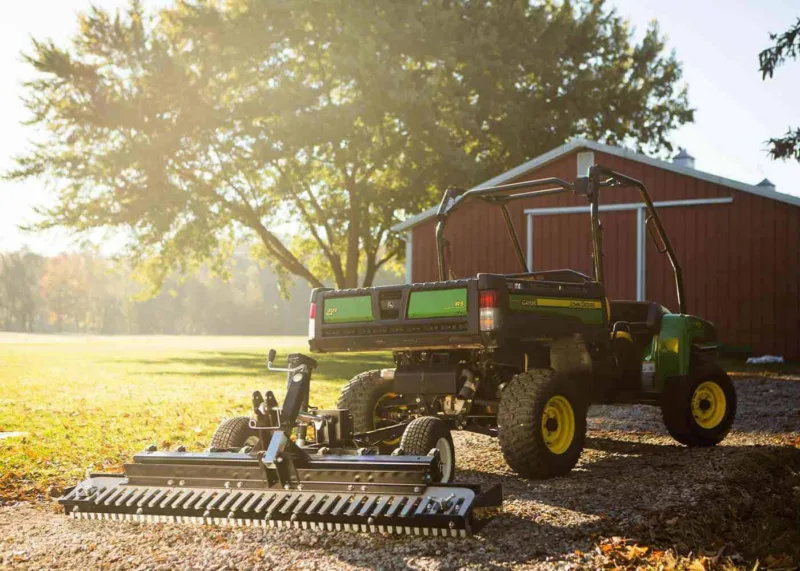
- An ATV
- A side-by-side
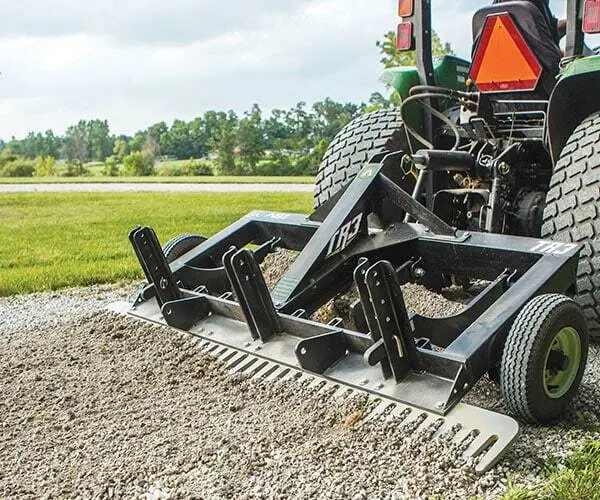
- A compact tractor
- A garden tractor
then you already own the horsepower needed to maintain a gravel driveway properly.
The issue is usually the attachment.
Many driveway tools only move loose surface gravel around. They make the driveway look smoother temporarily, but they do not actually penetrate deep enough to remove compaction.
That is why potholes keep returning.
To permanently repair potholes, the attachment must be able to:
- Scarify and loosen compacted material
- Reach the full depth of the pothole
- Relevel the surface
- Finish smoothly in the same pass
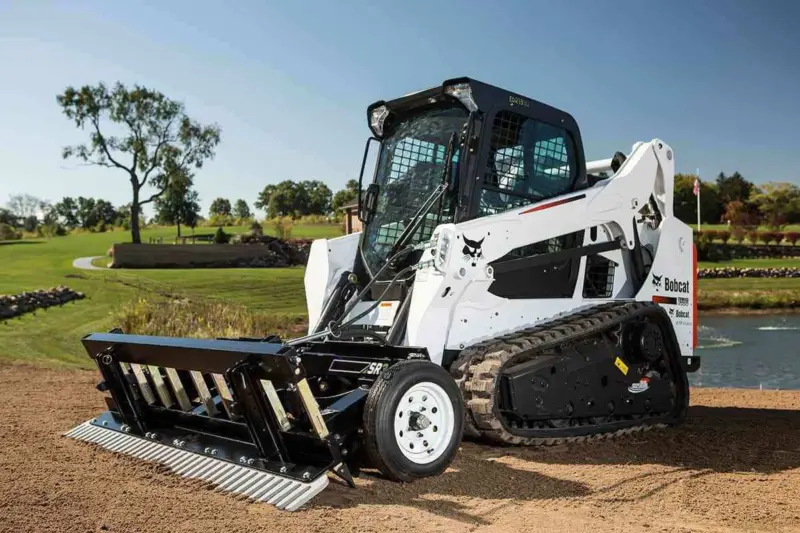
That is why tools like the ABI TR3 Rake and Rascal series use adjustable scarifying teeth combined with gauge wheels that control working depth.
Gravel Driveway Tool Comparison
Tool Type | Breaks Compaction? | Controls Depth? | Finishes Surface? | Long-Term Pothole Repair |
Landscape drag | No | No | Lightly | Poor |
Rear blade | Limited | Operator dependent | Moderate | Moderate |
Box blade | Moderate | Limited | Rough finish | Moderate |
Scarifying driveway rake | Yes | Yes | Yes | Strong |
Why Spring Is the Worst Time for Potholes
Spring creates ideal pothole conditions because:
- Snowmelt saturates the driveway
- Freeze-thaw cycles weaken compaction
- Water collects in low spots
- Traffic pushes wet gravel outward
Once water starts pooling, tires force material away from the center of the depression and deepen the hole every time a vehicle passes through it.
That is why potholes seem to appear almost overnight after winter.
The Real Secret: Maintenance Before Failure
The best gravel driveway owners are not rebuilding potholes every spring.
They are preventing them from forming in the first place.
Small ruts and low spots develop gradually. If you make light grading passes every few weeks during warm-weather months, those minor imperfections never become deeply compacted potholes.
That changes driveway maintenance from:
- One massive annual restoration project
into:
- Small, fast maintenance passes throughout the season
For most property owners, grading once every few weeks or once per month during high-use seasons dramatically reduces pothole formation.
Signs Your Driveway Needs Maintenance Before Potholes Form
Watch for:
- Tire tracks holding water
- Washboarding or corrugation
- Loose gravel pushed toward the edges
- Minor depressions forming repeatedly
- Water no longer shedding properly
Addressing these early prevents expensive repairs later.
Why Adding More Gravel Often Wastes Money
One of the biggest misconceptions in driveway maintenance is assuming every pothole means you need more gravel.
Often, the material you need is already there. It has simply migrated away from the hole because of compaction and traffic flow.
Once the driveway is loosened and regraded correctly, existing gravel frequently fills the void adequately without requiring additional loads of stone.
That is why the “dig first” approach saves many property owners money on gravel they did not actually need.
Key Takeaway
If your gravel driveway potholes keep returning every spring, the issue is probably not a lack of gravel. It is compacted structure underneath the surface.
Filling potholes without breaking the compacted sidewalls only delays the problem temporarily.
Real repair means:
- Digging deep enough
- Breaking compaction fully
- Regrading correctly
- Maintaining consistently
Once you stop treating potholes cosmetically and start fixing the structure underneath them, your driveway maintenance becomes faster, cheaper, and far less frustrating year after year.